
Profile view of a bearded man wearing a dark green baseball cap and a dark gray T-shirt against a plain light background.

What a mini split tune-up covers in Arizona

Step 1 of 3: Equipment

A mini split tune-up covers cleaning the indoor blower wheel and filters, checking the refrigerant charge, clearing the condensate drain, washing the outdoor condenser coil, and testing that the system cycles and reads temperature correctly. In Arizona, the outdoor unit runs hard for months straight in heat that regularly tops 100 degrees, and dust blowing through gets pulled into the coil fins and the filters every time the system runs. A dirty coil makes the compressor work harder to move the same heat outside, and a clogged filter cuts the airflow your indoor unit needs to cool the room. Since most homes here rely on electricity for both heating and cooling, a system straining through summer shows up directly on your power bill. A tune-up catches a weak drain line or a coil caked with dust before it turns into a system that won't keep up when it's 110 degrees outside.

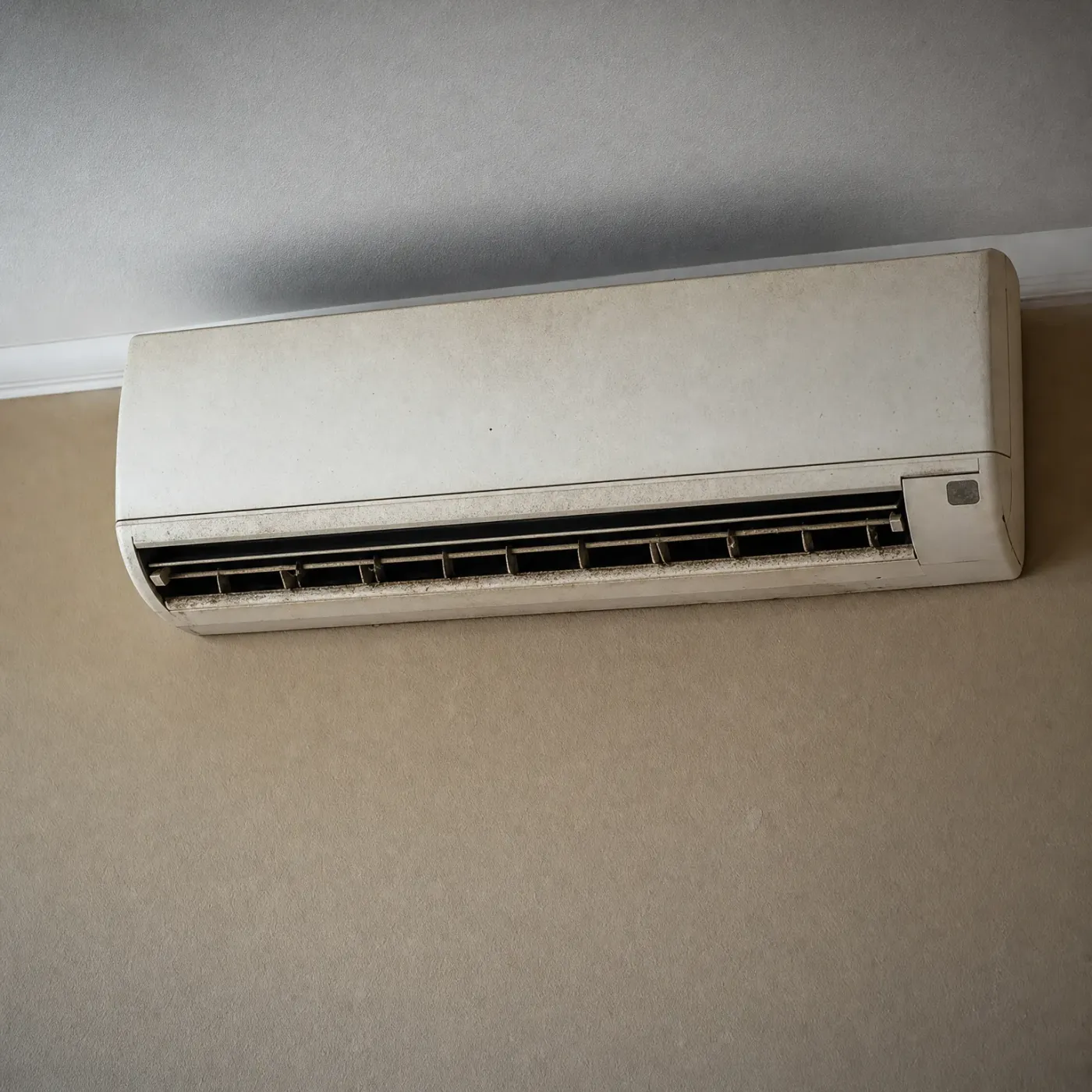
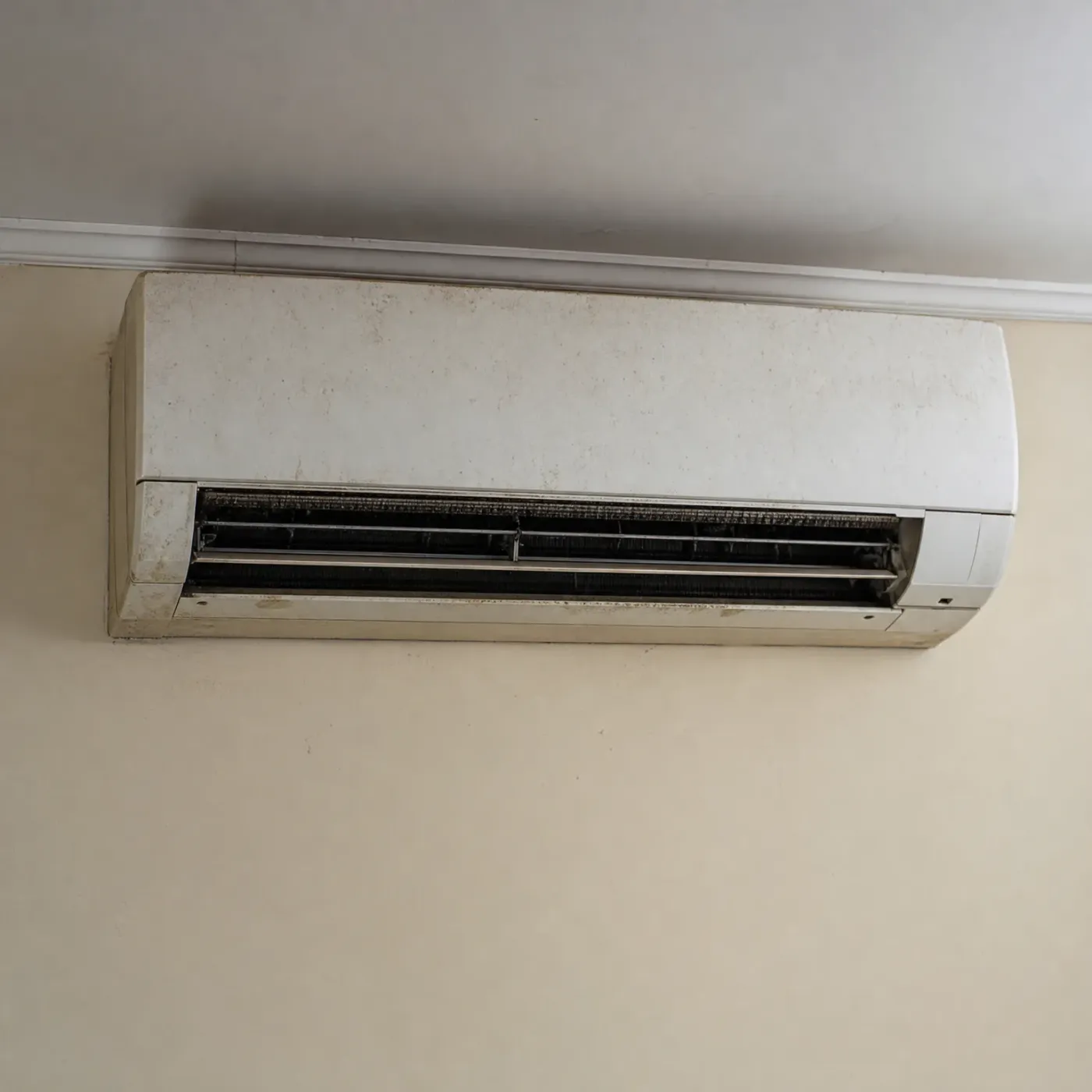
A dusty white wall-mounted mini-split air conditioner installed high on a beige interior wall below a molded ceiling trim.
Before you get your mini split maintenance
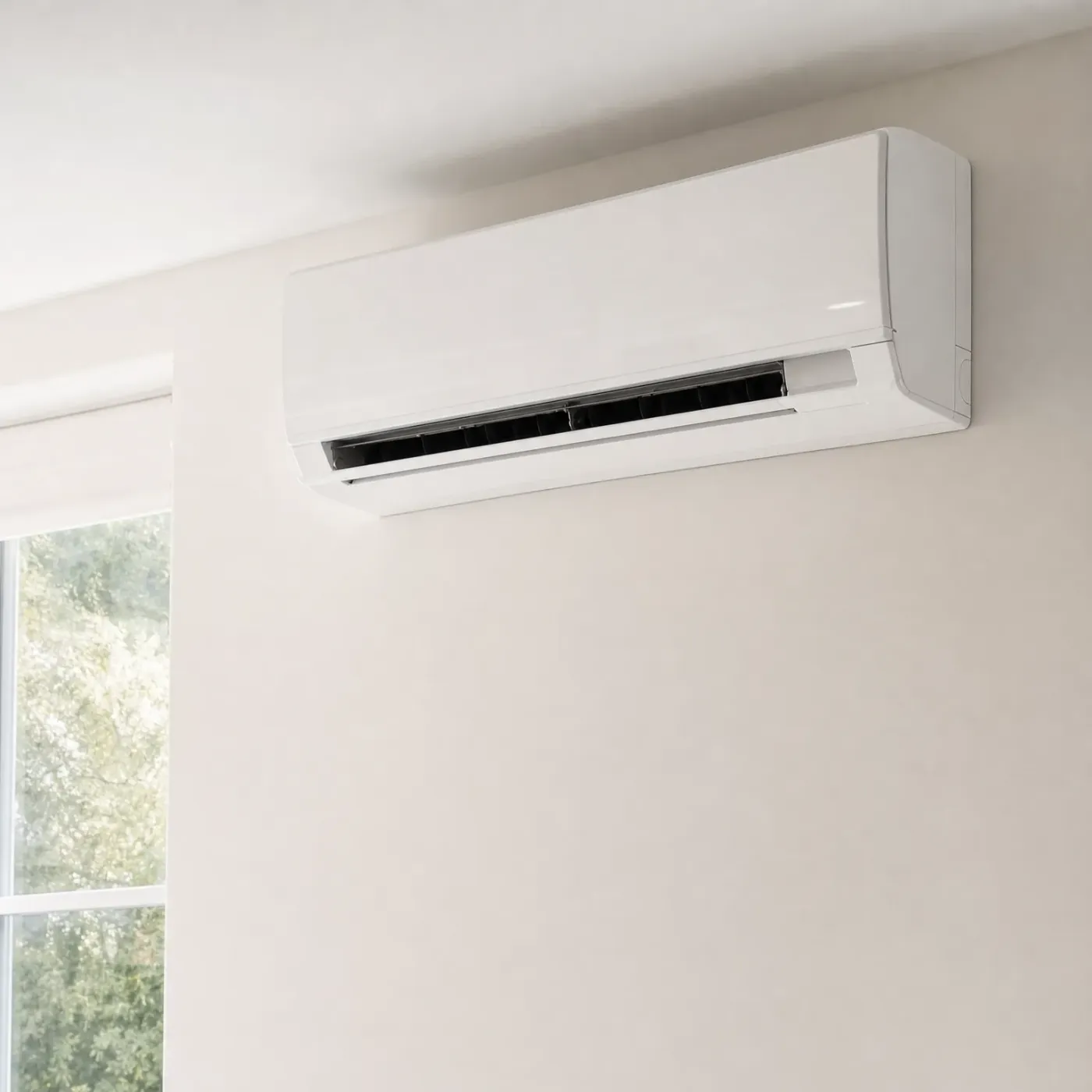
A white wall-mounted mini-split air conditioner unit installed high on a light gray interior wall near the ceiling, with a white-framed window and green foliage visible at the left edge.
After you get your mini split maintenance

Why the coil matters most here

Arizona dust sits on the outdoor condenser coil all summer, and a coated coil can't shed heat the way a clean one does. That makes the compressor work harder to hit the same temperature, and it runs longer to do it. Washing the coil is part of the tune-up for this reason, not just to make the unit look clean. A mini split that runs this hard from April through October depends on that airflow more than one that only runs a few months a year.


What the drain line is for

The indoor unit pulls moisture out of the air even in a dry climate, and that water has to go somewhere. It runs down a condensate drain line, and if that line clogs, the water backs up into the indoor unit instead of outside. Clearing the drain is a standard part of the service because a blocked line is one of the more common reasons a mini split leaks or shuts itself off, even when the refrigerant charge and the coil are both fine.

A gray-haired bearded man in a dark coat and scarf dusted with snow stands smiling in a dimly lit entryway with a white front door, a side table with a lit lamp, an oval mirror, and a patterned rug.
An older bearded man in a dark snow-dusted coat and gray scarf stands just inside a dimly lit home entry, with a framed picture, lit table lamp, and an adjoining room with a fireplace behind him, and snow visible through the open door.
A gray-haired, bearded man in a dark snow-dusted coat stands smiling in a dimly lit entry hall with a staircase, a lit table lamp, a framed picture, and a living room visible through a doorway.
An older man with gray hair and a beard, wearing a dark jacket dusted with snow, stands smiling in a dimly lit hallway with lamps and a living room visible behind him.

Order matters here. The filters come out first, since dust clogging them blocks the airflow everything else depends on. With those clear, the blower wheel gets cleaned by hand, because built-up dust on the fins throws it off balance and makes the motor push harder for the same air. Gauges go on the lines next to check the refrigerant charge against the manufacturer's numbers. Too little or too much and you lose capacity either way. The condensate line gets flushed, since algae and dust build up there and a clogged line can back up or shut the unit down. Outside, the condenser coil gets washed from the inside out, because dust here packs into the fins from the outside. Once it's back together, the system runs a full cooling cycle to confirm it hits the set temperature and shuts off on its own. That last step is what tells a technician the work actually held, not just that the parts got wiped down.

How the tune-up actually goes

  • A technician pulls the indoor unit's cover and slides out the filters before touching anything else, since dust blocks airflow before it ever reaches the coil.
  • The blower wheel gets wiped down by hand or with a brush, because dust built up on the fins throws it out of balance and makes it work harder to push the same air.
  • Refrigerant charge gets checked against the manufacturer's spec with gauges, not guessed at, since too little or too much both cost you capacity.
  • The condensate drain line gets flushed to clear algae and dust, since a clogged line backs up and can shut the system down or leak into the wall.
  • The outdoor coil gets washed with water or coil cleaner from the inside out, since Arizona dust packs into the fins from the outside in.
  • Once it's back together, the system gets run through a full cooling cycle to confirm it reads the set temperature and shuts off when it should.
A white wall-mounted mini-split air conditioner installed near the ceiling on a light-colored interior wall, with a window and green foliage visible at the left edge.
A clean mini split keeps even airflow across the room and holds the temperature you set it to.
A dusty white wall-mounted mini-split air conditioner indoor unit installed high on a beige interior wall below a white ceiling and trim.
Dust packed into the intake grille chokes airflow, so the unit runs longer and still falls short.

What Skipping Maintenance Costs You

  • A mini split running on a coated coil all summer long raises the electric bill without you changing the thermostat at all.
  • A clogged condensate drain backs up and drips from the indoor unit onto the wall or floor below it.
  • A dirty filter starves the blower, so the room by the head never quite reaches the temperature you set.
  • Skipping a tune-up lets a small refrigerant leak go unnoticed until the system stops cooling on the hottest week of the year.
  • A unit left unchecked season after season wears the compressor down faster than one that gets cleaned and tested every year.
  • Instead of searching out a contractor and explaining your mini split setup from scratch, you answer a few questions once and get matched with someone who already knows what to check.

Arizona summers don't give a mini split any time to coast. It runs for months straight, and whatever is wrong with it keeps being wrong the whole time. A coated condenser coil means the compressor works harder for the same result, and that shows up on the power bill before you ever notice the unit struggling. A filter packed with dust starves the blower, so the room never quite hits the temperature on the thermostat, and you end up nudging it lower and wondering why that doesn't help either. The condensate drain is its own problem. Once it clogs, water has nowhere to go but back into the unit or down the wall beneath it, and by the time you see a stain the damage is already done. A refrigerant leak is worse because it is quiet. A system can run low for weeks, cooling a little less each day, until the week it finally stops cooling altogether, usually the hottest week you've had all year. None of this is damage you caused. It's wear a unit takes on simply by running, season after season, with nobody checking the coil, the drain or the charge. A compressor that gets cleaned and tested every year carries less strain into the next one than a compressor left to run however it's running. Instead of tracking down a contractor yourself and walking them through your setup from the start, you answer a few questions once and get matched with someone who already knows what a mini split in this climate needs checked.

Power costs 15.26 cents per kilowatt-hour statewide

At 15.26 cents a kilowatt-hour, every extra hour your compressor runs to hit the same temperature shows up on the bill. A mini split working against a dusty coil or a clogged filter pulls more power for the same cooling, all summer long.

EIA-861 2025 statewide residential average

A woman wrapped in a thick beige fleece blanket sits on a sofa with an open book on her lap, beside a lit table lamp, with a frost-covered window behind her.
An older woman with gray hair in a bun and glasses, wearing a beige knit sweater, smiles while looking to the side in a warmly lit kitchen, with a loaf of bread on the counter in the foreground and a snowy scene outside the window.

Get the right pro for your mini split

Fill out one form instead of calling around for a mini split tune-up.

Sending the form costs nothing.

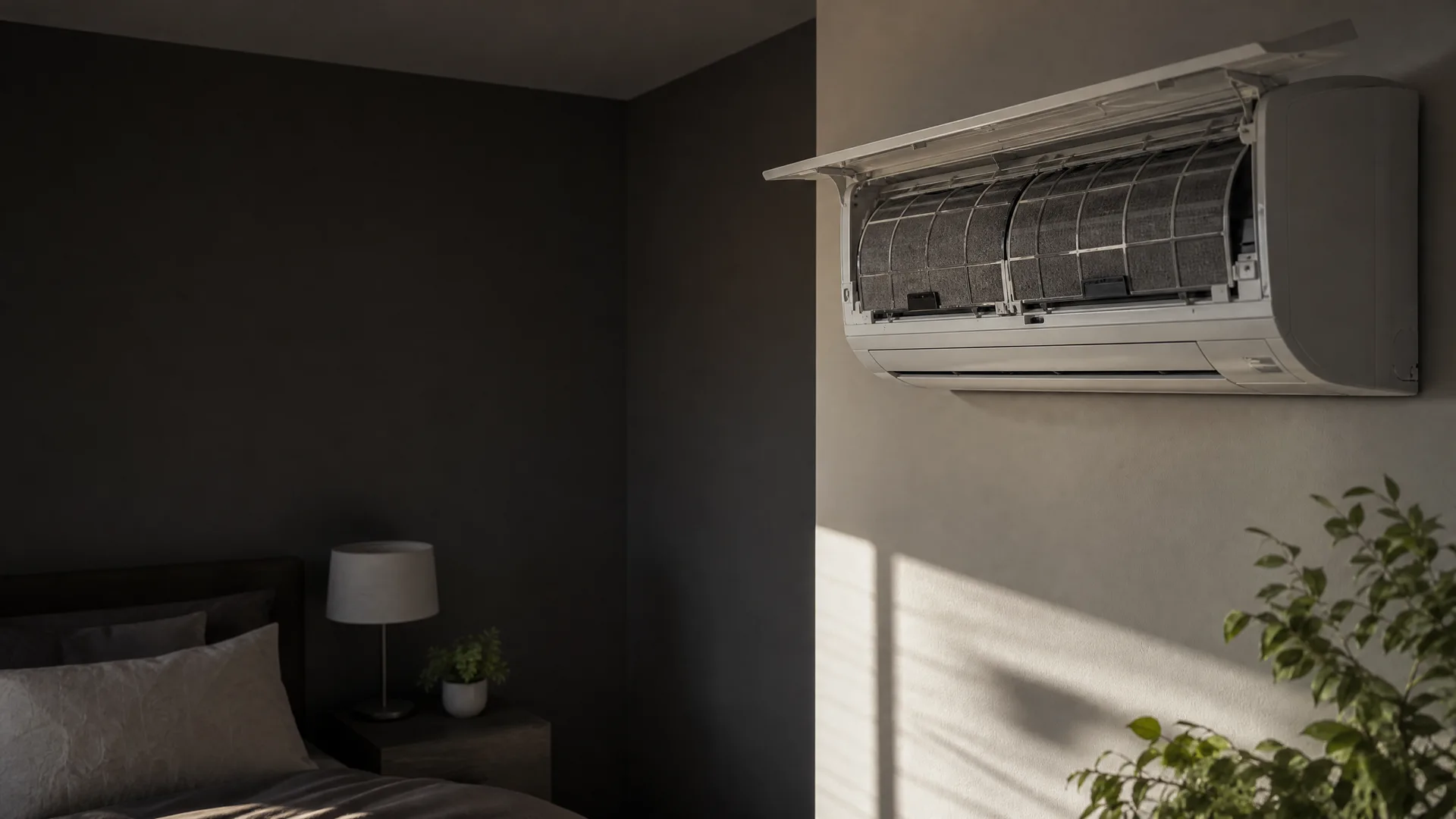
A wall-mounted mini-split air conditioner with its front cover open exposing the filters, in a dim bedroom with a bed, nightstand lamp and a potted plant.

You pull the cover off the indoor unit on a warm spring afternoon, just to check before summer gets going. The filter screen behind it is grey with dust, the mesh barely visible through the buildup. You run a finger across it and it comes away dark. The room has felt a little warmer than the thermostat setting the last few days, and you figured it was just the first heat of the season moving in early. Looking at the filter now, you wonder how long it's been pulling air through that much dust, and how much of what you've felt was the house warming up and how much was this.

Schedule It Now or Scramble Later

Tune-up every year

  • You schedule one visit and someone handles the diagnosis, the coil wash, and the filter cleaning in a single trip.
  • You skip the calls to three different companies asking who even services mini splits in your area.
  • You don't have to describe the same noise or the same warm air problem over and over to different people.
  • You get matched with a contractor who already knows the equipment, instead of sorting through quotes yourself.
  • The coil gets washed before the dust has a full summer to bake onto it.

Wait and see

  • You start looking for help only after the unit is already blowing warm air in July.
  • You're the one calling around, comparing who can come out soonest and who actually works on mini splits.
  • You explain the same symptoms to every company you call until one of them can fit you in.
  • A coated coil and a clogged drain have already cost you some electricity before anyone looks at it.
  • Finding a contractor becomes urgent instead of routine, right when everyone else is also calling.
A two-story house with gray and light gray siding, white-trimmed windows and a white front door, flanked by deciduous trees, with a partly browned lawn in front under a clear blue sky.

Arizona air is dry, but summer humidity still averages a dew point of 47°F across June, July and August, according to NOAA climate data. That's enough moisture for your mini split's indoor coil to pull water out of the air it cools, and that water has to drain somewhere. A clean system handles it without issue. One with a clogged filter or a dirty coil cools less efficiently, so the unit runs longer to catch up, and more condensation collects on the coil over that longer runtime. If the drain line is already slow, that's when you see water stains under the indoor unit.

NASA POWER T2MDEW county cells weighted by homes

A smiling man in a denim shirt and white t-shirt stands in an open dark doorway of a stucco house, facing a woman with long brown hair and a green jacket seen from behind in the foreground.

A mini split tune-up means the coil, the filters, and the drain get checked before summer asks anything of them

That's the whole answer. Someone looks at the parts that get dirty, cleans what needs cleaning, and checks that the system still reads and holds the temperature you set. Nothing about that changes because it's Arizona, except how much the coil and filters take on by August.

Right now you'd have to find who does this kind of work, call them, describe the unit and what it's doing, and wait to hear back, maybe more than once if the first company doesn't service mini splits. Converting here skips that part. You get matched with a contractor who handles this equipment, and they reach out to you directly to work out the rest.

A gray upholstered sofa with a matching cushion sits beside a potted plant and a wooden table holding a small green plant in a stone pot, near a curtained window.
A single-story house with a dark tile hip roof, stucco walls and stone-clad entry, with a saguaro cactus in the left foreground and desert hills and mountains in the background.

A pro who works on mini splits

Skip calling around

You're not committing to anything by asking.

You already know the coil and the filter need checking. Finding someone who services mini splits and getting a time on the calendar is the part that eats an afternoon. Send the request once and skip the calls around town before the heat sets in for good.