Profile view of a bearded man wearing a black baseball cap and a dark gray T-shirt against a plain light background.

Why your mini split blows cold air in Arizona

Step 1 of 3: Equipment

Why is my mini split blowing cold air when it's set to heat?

With Arizona homes relying on electric heat pumps, a mini split that blows cold air on the heat setting during the cooler months feels backwards and leaves the house uncomfortable fast. You want to know whether this is normal operation or something that needs a repair call before the next cold morning.

It's likely low refrigerant or a reversing valve stuck in cooling mode

A mini split makes heat by reversing the flow of refrigerant through its coils, and that switch happens at a part called the reversing valve. If that valve sticks or fails, the system keeps running in cooling mode no matter what the thermostat is set to. Low refrigerant does something similar, because the unit needs a full charge to move heat efficiently in either direction. Arizona winters are mild, but nights still drop into the 30s and 40s in many areas, and a household depending on electric heat needs the mini split working correctly, not blowing cold air when someone's trying to stay warm. Either problem calls for a technician with gauges and training on the system, not something to diagnose by ear.

Single-story house with gray horizontal lap siding, dark shingled gable roof, a small covered front porch with a dark door, and windows, set behind a patchy green and brown lawn under a clear blue sky.

Summer air here is dry. The dew point averages 47°F through June, July and August, according to NOAA climate data, which is low compared to the muggy parts of the country. Dry air moves heat easily, so your mini split's outdoor unit works against intense heat without the extra load humidity would add. That's part of why, when the weather turns and you switch it over to heat, the system can behave oddly, like blowing cold air instead of warm. The unit spends most of the year doing one job, cooling against dry desert heat, and the heat pump side gets far less use. When something is off with the reversing valve or the refrigerant charge, this is often where it shows up first.

NASA POWER T2MDEW county cells weighted by homes

Is this just a cold snap, or is the unit stuck?

Check the wall unit. If the fan is running but the air coming out is cold instead of warm, and the outdoor unit isn't icing over, the system likely isn't switching into heat mode the way it should. You might hear it cycle on and off more than usual, or notice it running for a while without the room actually warming up. Arizona nights get cold enough that a mini split stuck in cooling mode leaves a house genuinely uncomfortable, not just mildly chilly. If this is the only heat source for that room, it's worth sorting out before the next cold stretch rather than layering on blankets and waiting it out.

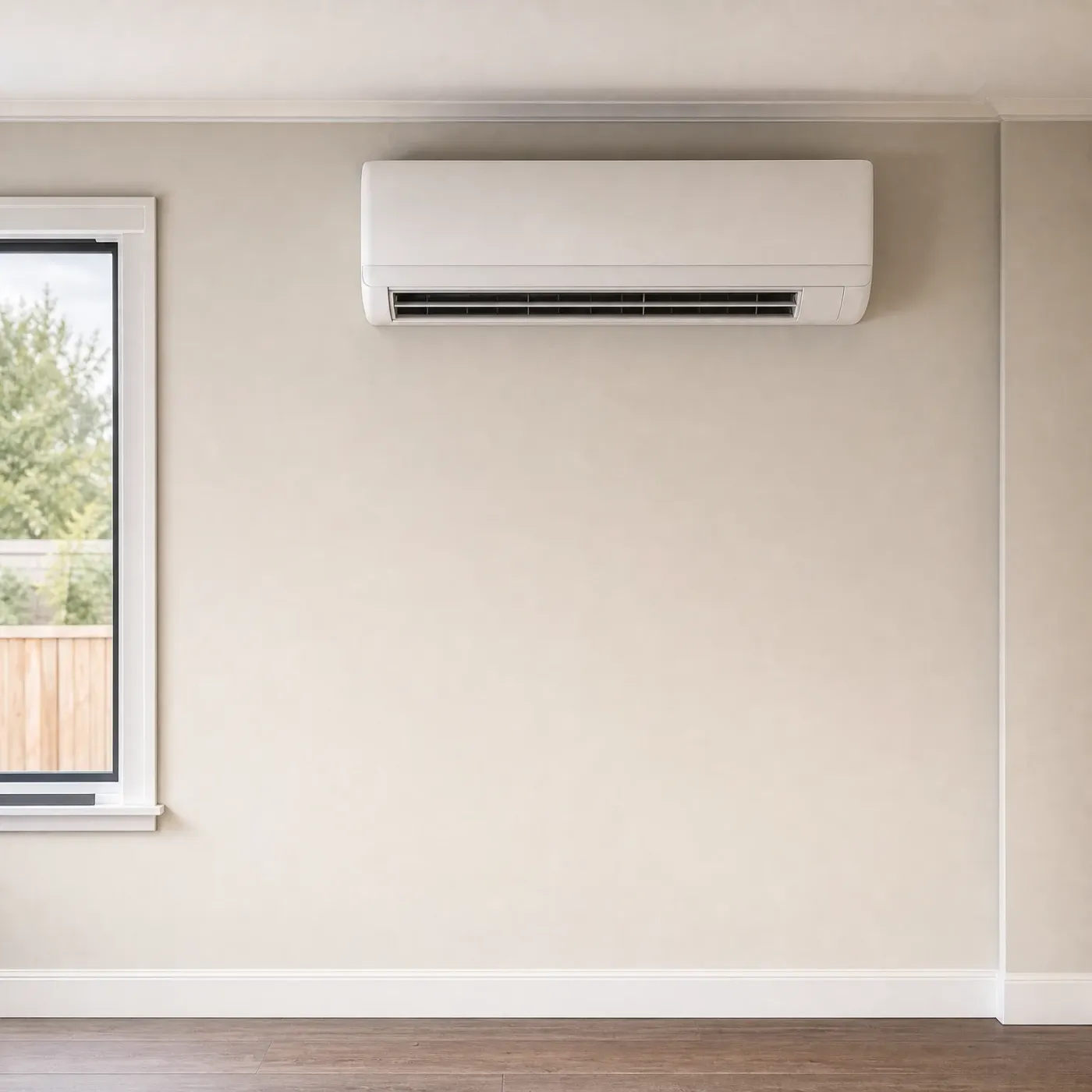
A white wall-mounted mini-split air conditioner on a beige interior wall, with a window at left showing trees and a wooden fence, and dark wood flooring below.

Heating normally

Set to heat, the wall unit should push air that's warm to the touch within a few minutes. The fan runs quiet and steady, and the room comes up to temperature without any clicking or cycling on and off. That's a mini split doing its job on a cold desert morning.

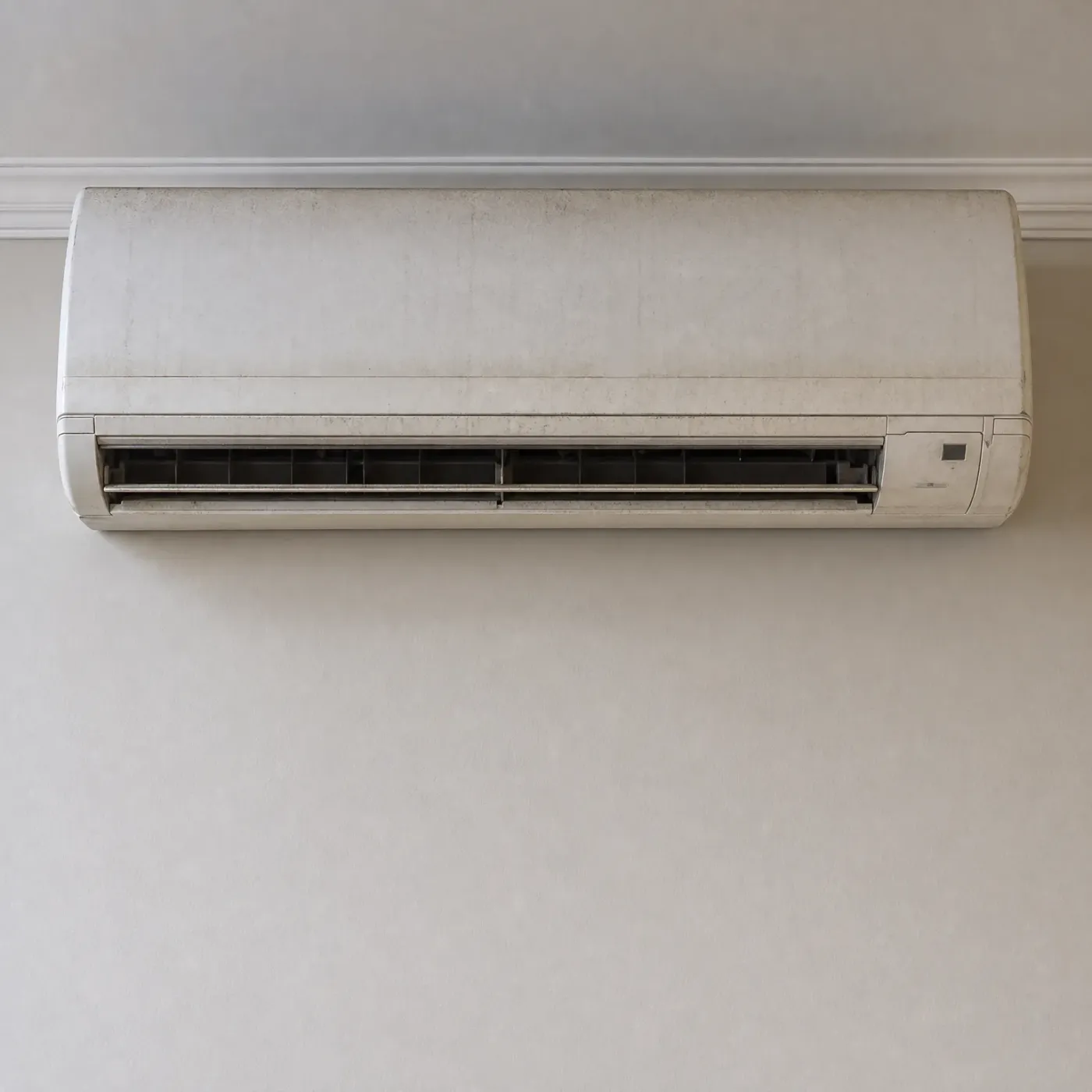
A white wall-mounted mini-split air conditioner indoor unit with dark louvered vents, installed near the ceiling on a beige wall below white crown molding.

Stuck on cold

The fan runs, but the air stays cold or barely warm no matter how long you wait. You might hear the system cycle on and off more than usual, or notice it just won't climb past room temperature. That's the reversing valve or a control board failing to switch the system over.

Valve Failure or Signal Problem

Stuck on cooling

  • The reversing valve that switches the unit between heat and cool is stuck in one position, so it keeps sending cold refrigerant no matter what the thermostat says.
  • You'll hear a faint click when the system tries to switch modes, and if that click isn't happening, the valve likely isn't moving.
  • This doesn't fix itself by changing the setting again or restarting the unit, since the valve itself has failed to shift.
  • A contractor can test the valve directly and confirm whether it's receiving power and moving, rather than guessing from the symptoms alone.
  • Left alone, the unit keeps running in the wrong mode every time it's needed, so the house never gets the heat it's set to.

A control or sensor fault

  • Sometimes the valve itself is fine, but a bad sensor or control board tells it to stay in cooling mode even after you've set it to heat.
  • The remote or wall unit display might still show 'heat' selected, which makes the problem look like the valve when it's actually the signal reaching it.
  • A loose or corroded wire connection between the indoor and outdoor units can cause the same mode confusion.
  • This kind of fault can come and go, so the unit might heat correctly one day and blow cold the next.
  • A technician checks the control board and wiring before replacing any parts, since swapping the valve won't help if the signal is the real issue.
  1. Thermostat calls for heat and signals the outdoor unit.

  2. Reversing valve should shift to send warm refrigerant inside.

  3. Compressor pressurizes refrigerant to carry heat into the room.

  4. Indoor fan pushes warm air out when the valve shifts correctly.

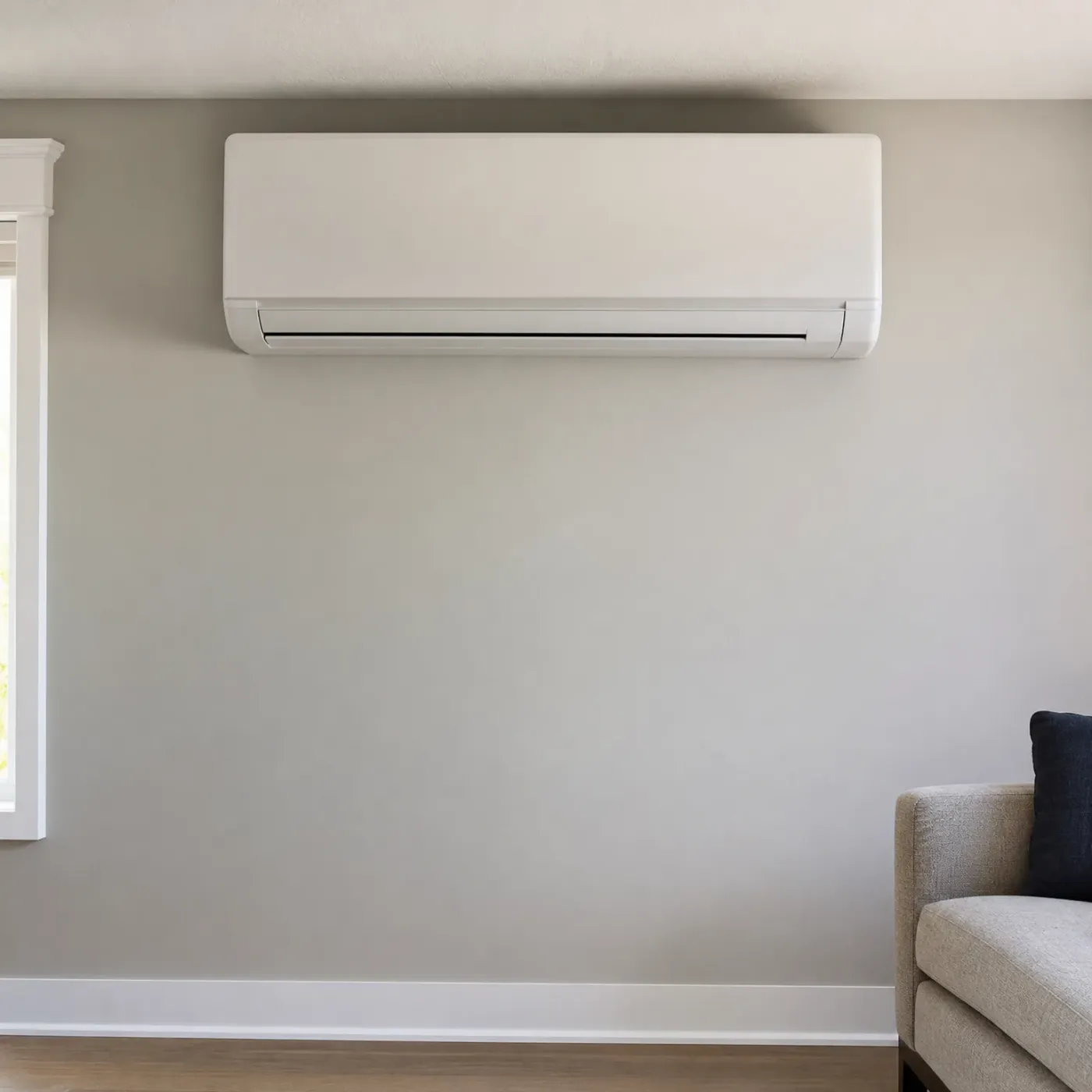
A white wall-mounted mini-split indoor unit installed high on a gray interior wall, with a window at left and part of a light gray sofa with a dark cushion at lower right.
Vents clear, housing clean, and air coming out at the temperature you set it to.
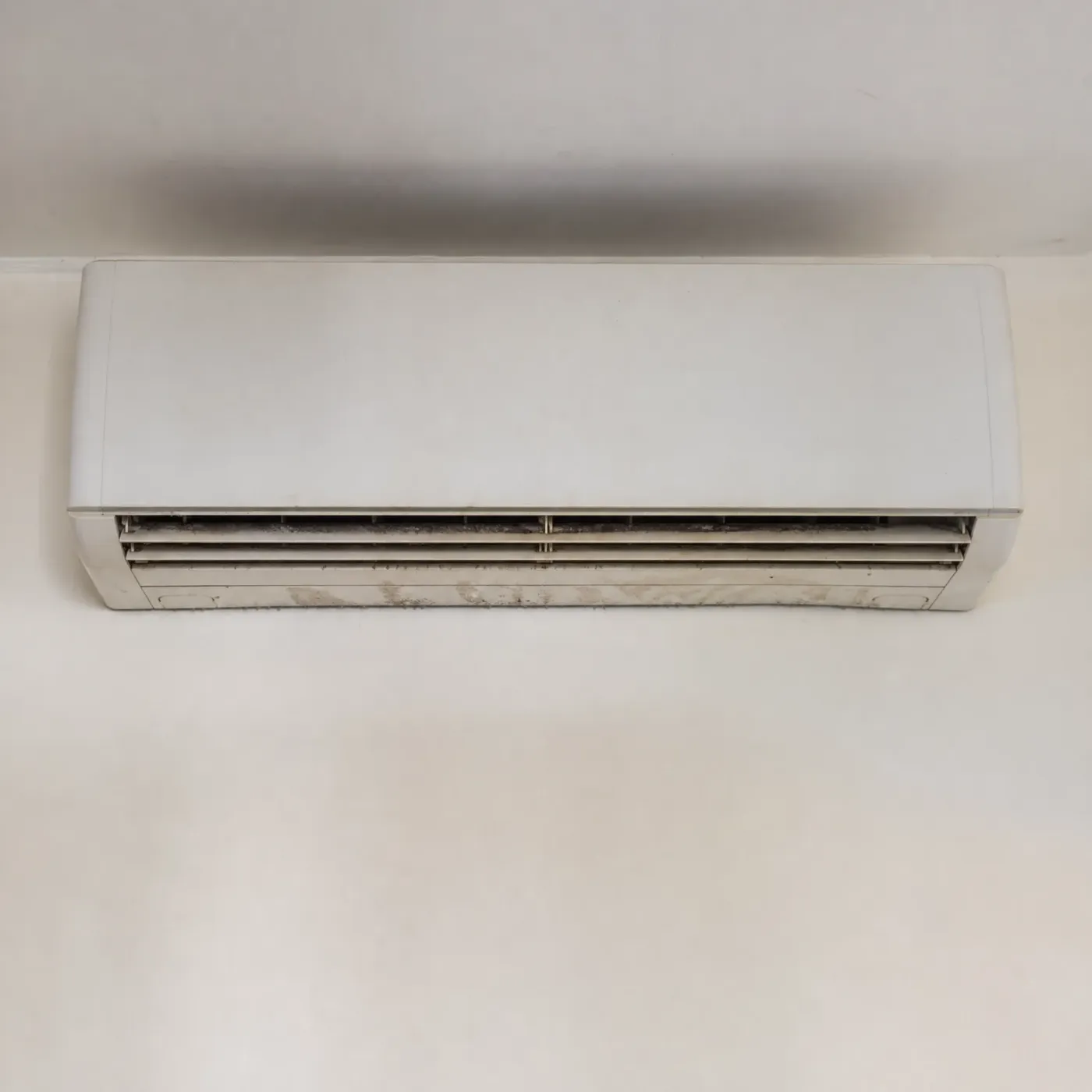
A white wall-mounted mini-split air conditioner indoor unit with visible dust and staining along its lower vent, installed on a plain pale wall.
Dirt and mold along the vents can keep a mini split from heating or cooling the way it should.
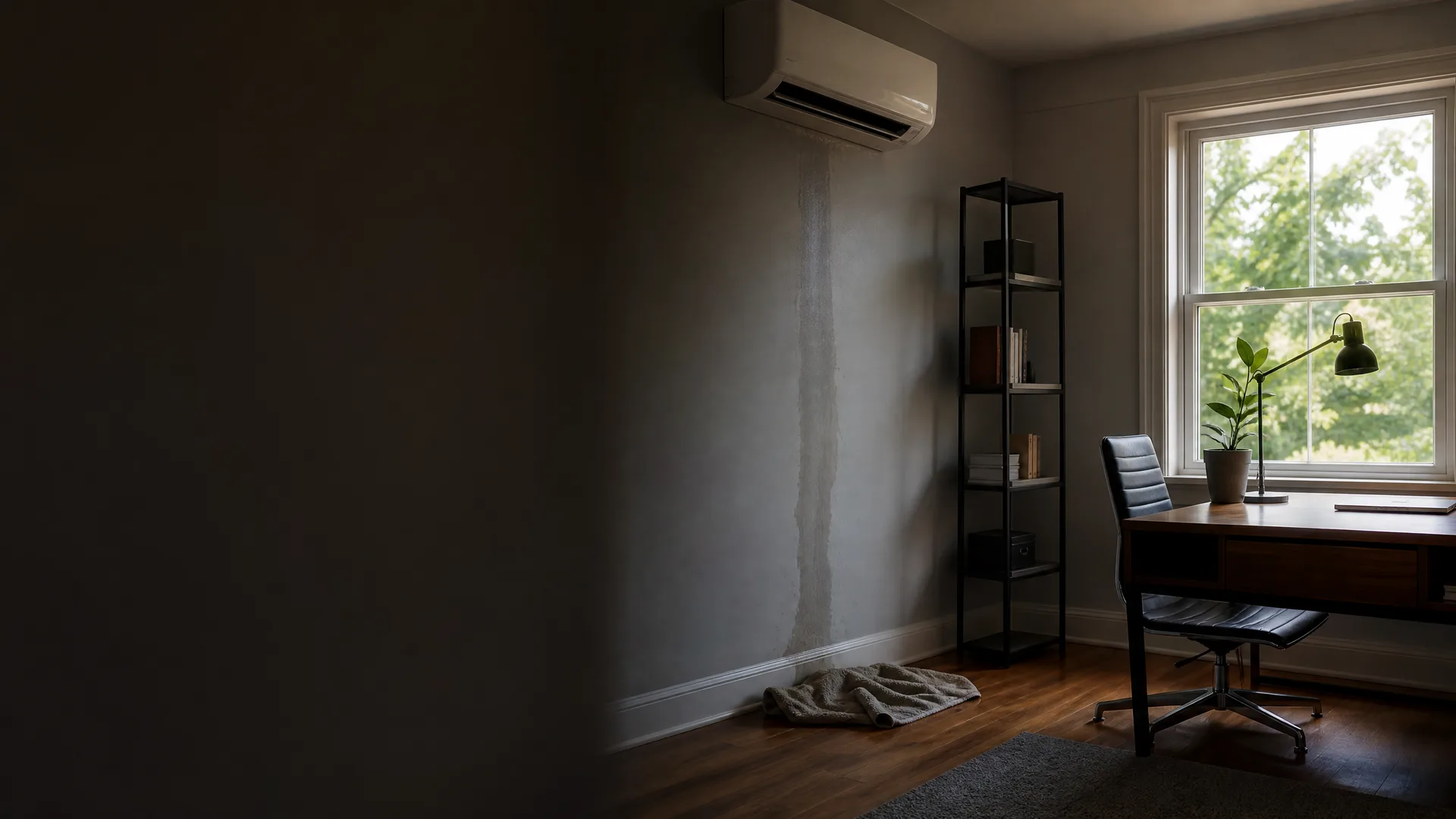
A dim room with a wall-mounted mini-split air conditioner above a water stain running down the gray wall to a towel on the wood floor, with a black shelving unit, a desk with a lamp and potted plant by a window, and an office chair at right.

It's late afternoon and you're at your desk in the home office, the mini split on the wall above you set to cool against the dry Arizona heat outside. You notice the wall under the unit first, a dark streak running down from the housing, the paint starting to bump. You've already folded a towel on the floor under it, and it's gone damp twice today. The air coming off the unit still feels right. The wall doesn't. You stand there looking at the streak, trying to decide if it's gotten longer since this morning.

A pro who works on mini splits

Once you send the form, finding a pro is off your list.

It costs nothing to send, and you don't have to hire anyone.

Inside the reversing valve

  • The reversing valve carries a small solenoid coil that shifts a slide inside the valve body.
  • A failed solenoid leaves the slide stuck in the cooling position even when the thermostat calls for heat.
  • Low refrigerant charge can keep the valve from shifting fully, so some cold refrigerant still reaches the indoor coil.
  • A control board fault can send the wrong signal to the valve, so it never gets the command to switch.
  • Dust or corrosion inside the valve body can bind the slide so it won't move even with a good signal.
  • Once the valve sticks, the compressor keeps pumping refrigerant in the same direction no matter what the wall unit is set to.

The reversing valve is the part that decides whether your mini split heats or cools. It sits between the outdoor and indoor coils, and a small solenoid coil on top of it shifts a slide back and forth inside the valve body. That slide routes refrigerant one way for cooling, the other way for heat. When the thermostat calls for heat, the solenoid should pull the slide over, and the compressor keeps running the whole time, sending refrigerant wherever the valve points it.

Several things can keep that slide from moving. The solenoid coil itself can fail, which leaves the slide locked in the cooling position no matter what the wall unit is set to. The control board can send a weak or wrong signal, so the solenoid never gets the command to shift at all. Low refrigerant charge is another cause. The valve needs enough pressure behind the refrigerant to force the slide fully across, and with the charge low, it can shift partway and let cold refrigerant keep bleeding through to the indoor coil alongside the warm. Dust and corrosion inside the valve body cause a fourth kind of failure, binding the slide in place even when the solenoid fires correctly.

In every one of these cases, the compressor doesn't know anything is wrong. It keeps pumping refrigerant in the same direction, which is why the system can run steady, with no unusual noise, and still blow cold air on the heat setting.

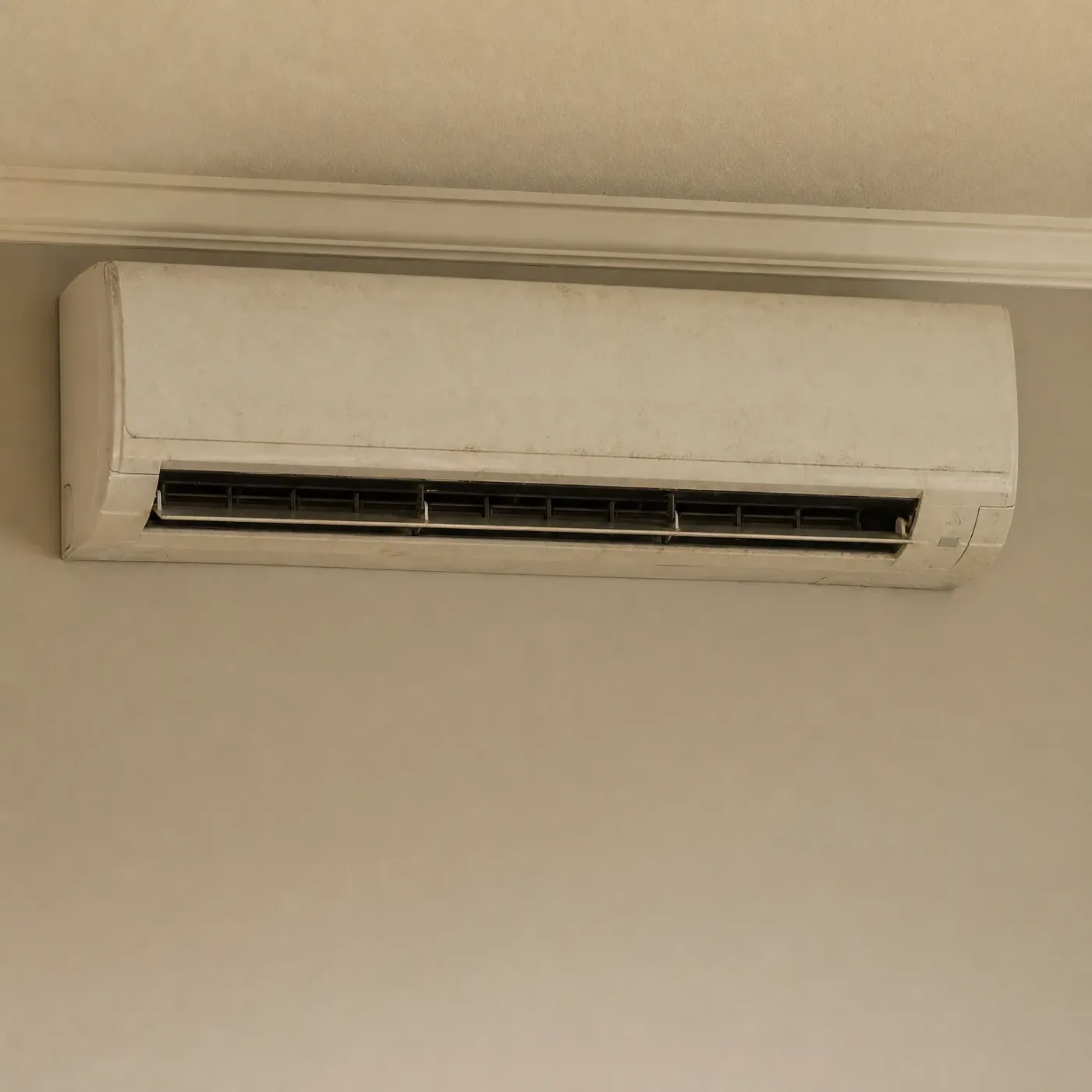
A dusty, discolored white wall-mounted mini-split air conditioner unit installed on a plain beige interior wall below a molding strip.
Before you get your mini split repair
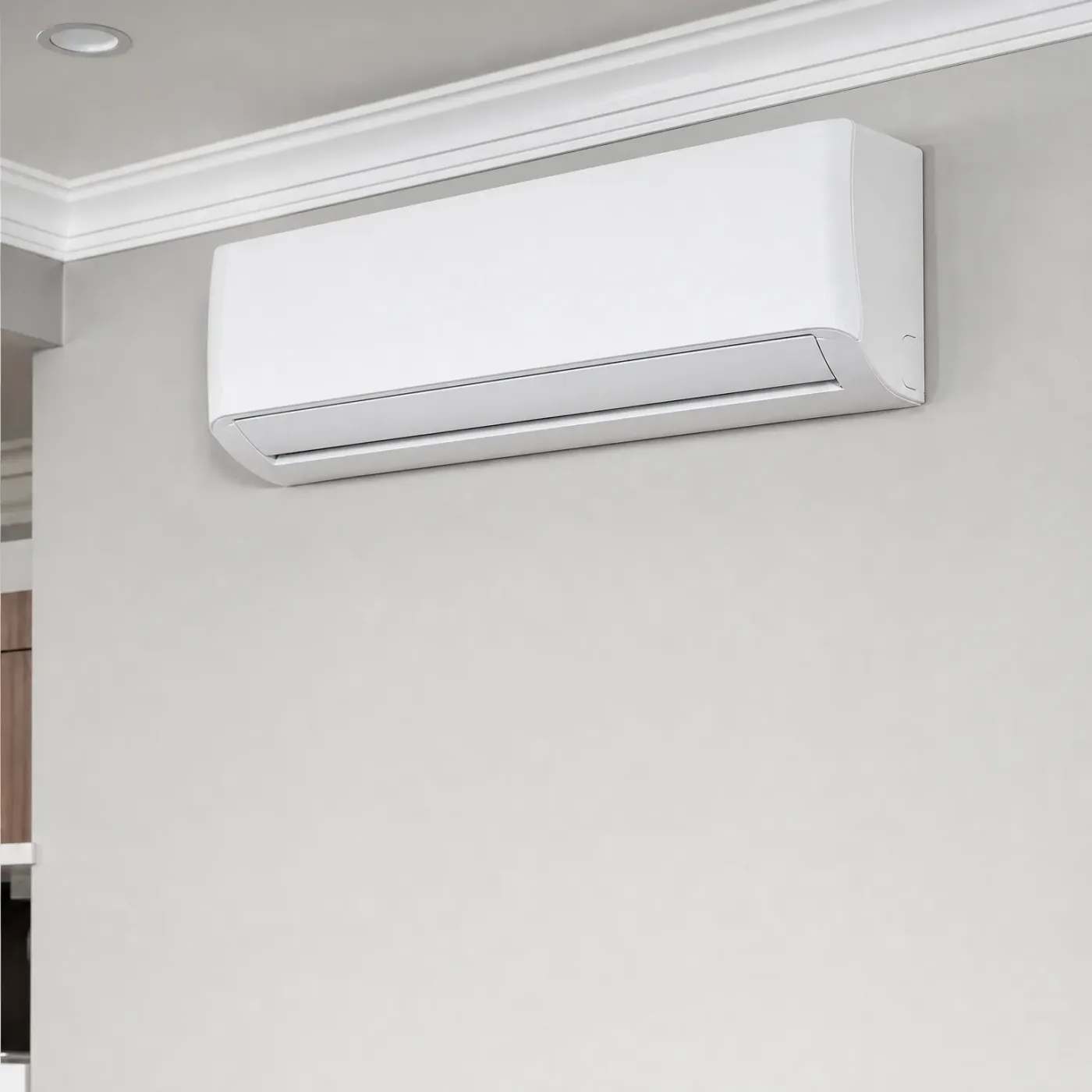
A white wall-mounted mini-split air conditioner installed high on a light gray interior wall below a white crown molding and ceiling with a recessed light.
After you get your mini split repair

The reversing valve runs on a signal, not a switch you can see. When the thermostat calls for heat, the control board sends a low voltage down to a solenoid coil on the valve. That coil is supposed to move a pilot valve, which shifts pressure and pushes a slide across the valve body so refrigerant flows the other direction. Each part in that chain can fail without the others failing with it. A coil can hum and still not have the strength to push the slide all the way. Refrigerant running low changes the pressure the valve depends on to make that move, so even a healthy coil can't finish the job. The control board itself can send power to the coil and still never complete the command. None of this shows up as a dead unit. The fan runs, the display looks normal, and the air coming out stays cold. Over years, the slide sliding back and forth the same way wears a groove into the valve body, and that groove is often what leaves it stuck on the cooling side for good.

Why the valve gets stuck

  • The solenoid coil on the reversing valve draws a low voltage signal from the control board each time the thermostat calls for heat.
  • When that coil energizes, it moves a small pilot valve that shifts pressure against a slide inside the main valve body.
  • A worn or corroded coil can still hum or click without producing enough force to move the slide all the way over.
  • Refrigerant charge below the level the system needs reduces the pressure difference the valve relies on to complete that shift.
  • Contacts inside the control board can fail in a way that sends power to the coil but never completes the switch command.
  • Years of the slide cycling back and forth wear a groove into the valve body that lets it stick on the cooling side.
A gray-haired woman in a cream knit sweater stands in a dimly lit kitchen at night, looking to her right, with a round loaf of bread in the foreground and a dark window and potted plant behind her.
A woman and a sleeping child wrapped together in a cream knitted blanket on a couch, with a potted plant, framed photo and lit lamp in the background.

47°F average dew point

That's how dry summer air runs here, which is why the outdoor unit works hard against heat even without humidity to fight. A stuck reversing valve shows up fast in these conditions.

Hand off the search

One valve, two directions

The reversing valve is the only part that decides between hot and cold air. When it sticks, nothing else in the system can correct it, no matter how the thermostat is set.

Hand off the search
A woman with long wavy brown hair in a grey ribbed sweater sits on a couch indoors, looking toward a window, with a potted palm-like plant and fireplace behind her.
A woman with long brown hair wearing a green V-neck top and beige cardigan sits on a light sofa, looking off to the side, with a dining table, lamp and framed picture in the background.
A woman with long dark hair in a cream knit sweater sits on a beige sofa indoors, looking toward a bright window with a houseplant and framed picture in the background.
A woman with long dark hair in a green knit sweater sits on a couch indoors, smiling and looking toward a window with a blurred room behind her.

Power costs 15.26 cents per kilowatt-hour statewide

At 15.26 cents per kilowatt-hour, running a mini split stuck on cold air through a cold snap adds up fast, since the compressor keeps cycling to chase a heat setting it can't reach. A stuck reversing valve doesn't just leave you cold, it runs the unit harder for no warmth at all.

EIA-861 2025 statewide residential average

A mini split blowing cold air on the heat setting comes down to a reversing valve that isn't shifting the way it should, and that's a repair, not something that clears up on its own. You've already checked the wall unit, listened for the click, looked at the outdoor coil. If the air stays cold no matter what the thermostat says, the valve or the parts that control it need a hand from someone who can get inside the system. Once you send the form, the search is off your plate. A contractor who handles this equipment gets matched to your situation and reaches out, so you're not the one calling around during a cold snap trying to find somebody who picks up. The house doesn't have to sit uncomfortable while you sort through who's available. You've already done the hard part, figuring out this isn't normal. What's left is getting the right hands on it.

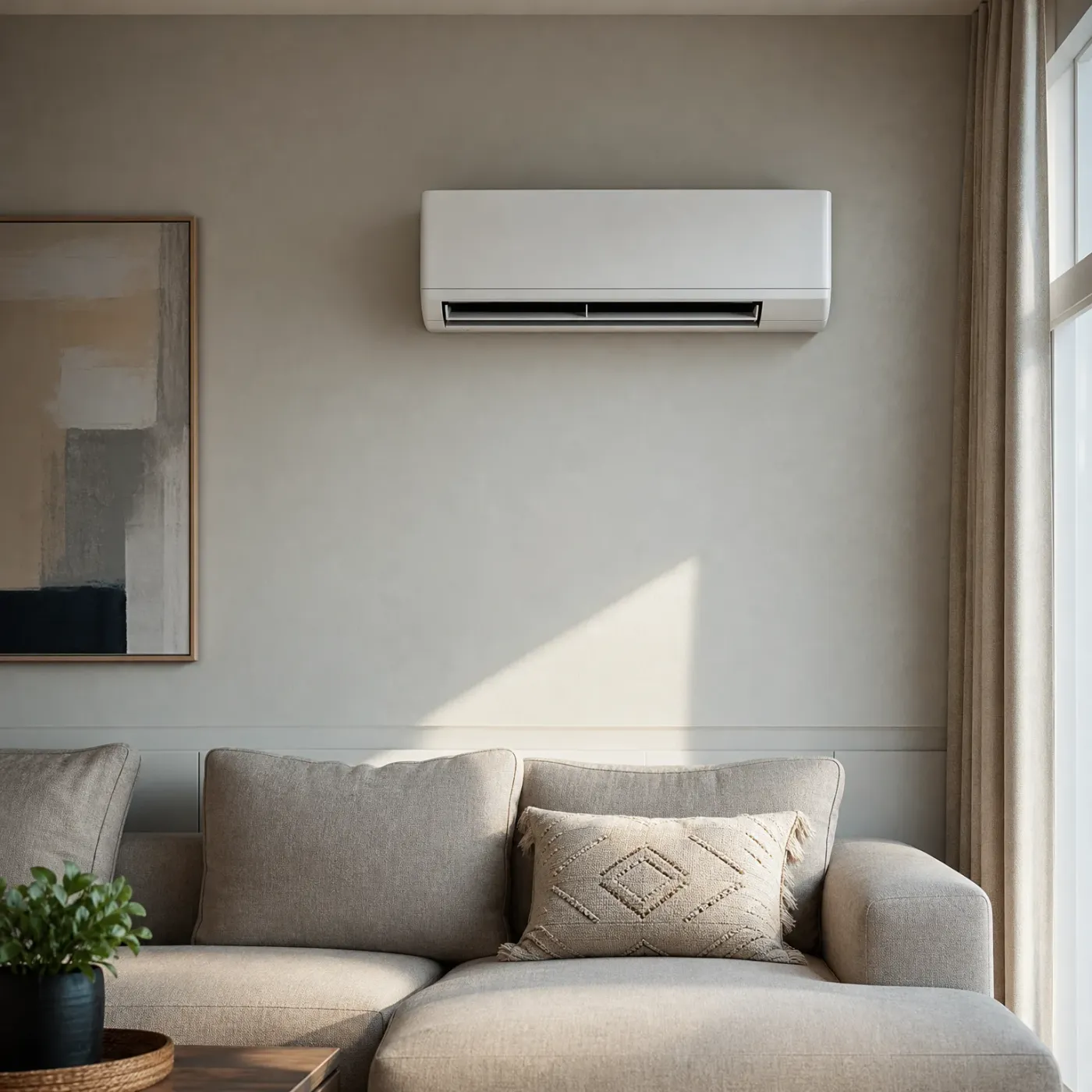
A white wall-mounted mini-split indoor unit on a light gray wall above a beige sectional sofa with a patterned cushion, beside a framed abstract artwork and a curtained window.

The right pro for this job

Send my request

Send the request today and stop worrying about who to call.

There's no charge for the request.